Marry Did You Know Is a Dumb Song
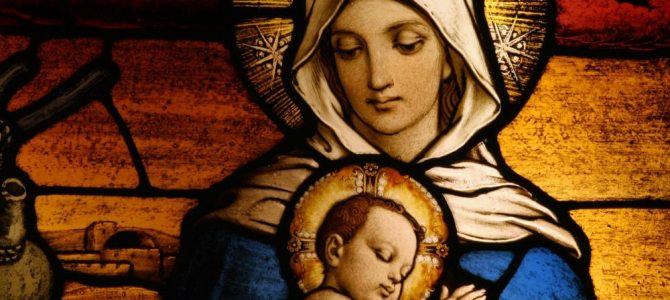
I saw the showtime one November 28 this year. Last year, I saw the first ane on the twenty-four hour period subsequently Thanksgiving. I'm talking about the meme that lambasts the Christmas song "Mary, Did Yous Know?" Overlaying some classical artwork of Madonna and Child were the words, "Yes, I knew. Stop asking already."
The adjacent 1 I saw was a GIF from The Wrestling Pastor (the best thing Twitter has going for it). A wrestler, nodding his caput in affirmation with arms-outstretched communicating exasperation and a "Can we give up the silliness of this settled question?" mental attitude, is placed underneath the commentary, "Mary did you lot know? Yep, she knew. GABRIEL TOLD HER!"
This happens every twelvemonth. Last twelvemonth it was "Why 'Mary Did Yous Know' Is the Most Biblically Illiterate Christmas Tune." On August xv, when the Lutheran Church-Missouri Synod (LCMS) commemorates St. Mary, mother of our Lord, ane of her pastors, a prolific blogger, wrote, "It is fanciful speculation to advise that Scripture is wrong and Mary did not know."
Every twelvemonth, theological pot-shots are taken confronting this song. Just of all the songs to level your theological ire against, this i surprises me considering there'southward bodily theological substance in this vocal, as opposed to say, "Away in the Manger," which appears not once, but twice, in the hymnal that is used in my congregation. So hither's my "Mary, Did You Know?" apologetic.
Information technology's a Rhetorical Question
Theologians, especially Lutheran ones, are trained at peachy lengths and at nifty expense to exist faithful readers of a text. A fair amount of this training is educational activity the theologian the full range and usage of language, so that we recognize a metaphor when a metaphor is existence employed and nosotros recognize a rhetorical question when a rhetorical question is existence employed. An case of a rhetorical question used in Scripture would be Psalm 44:23 "Awake! Why are you lot sleeping O Lord?" Patently, the Lord does not "slumber or sleep," every bit stated in Psalm 121:4.
When Gordon Fee and Douglas Stuart wrote their popular book "How to Read the Bible for All It's Worth," they divided it into capacity on the footing of literary genre. The epistles get two capacity; One-time Testament narratives go a chapter; Acts gets its own chapter; the gospels get a affiliate; the parables get their own affiliate, wisdom literature gets a chapter; and of course, Revelation gets its own affiliate. This is necessary because different hermeneutical approaches are used for different genres of writing.
Dr. James Voelz, a professor of New Testament theology, does a like thing in his book "What Does This Hateful? Principles of Biblical Estimation in the Post-Modern World." Instead of looking broadly at genres, Voelz zeroes in on specific linguistic tools and features.
In this textbook, the reader learns the difference betwixt signifiers and conceptual signifieds, illocutionary and perlocutionary force, semiotics and external entailments. This text and these terms are the foundational hermeneutical tools virtually seminarians are given if they are LCMS members. I wasn't fifty-fifty allowed to write a sermon until I was responsible plenty to translate a text, and reading Voelz's book was a requirement for learning that.
If y'all're going to literally answer an obviously rhetorical question, you expose yourself as a poor reader. But if you insist on being a poor reader, then at least be consistent and admit that some of these things Mary didn't know. Mary didn't know Jesus would walk on water. She didn't know Jesus would calm a storm. She may not have known that Jesus would give sight to a blind human being, only that depends on her Erstwhile Attestation literacy, the nature of the inaugurated kingdom of God, and the specific degree to which Jesus would fulfill these promises during his earthly ministry. If you insist on giving a literal answer to the song's rhetorical question, these are the fruitless places that you get.
Too, hymns are poetry. Poesy is varied in its communicative techniques. Rhetorical questions are role and parcel of the poetic arsenal. Let'south not pretend the song "Mary Did You lot Know?" is an honest inquest about the factual reality of whether Mary knew specific details of her son. This song, while posed as a question to Mary, is actually communicating to the singer and hearer the truths about Jesus.
What Truths About Jesus Are Expressed?
Dissimilar "Away in the Manger" which betrays gnostic tendencies such as telling us that Jesus awoke without crying, "Mary, Did Y'all Know?" communicates helpful salvific information well-nigh Jesus Christ. Here's a brief list of truths expressed and the accompanying lyrics that express them:
- Jesus is the savior of people. ("Mary did y'all know that you baby boy volition save our sons and daughters?")
- Mary is theotokos, the God-bearer. Early Christian debates concerning the word theotokos were more than about what the term confessed about Jesus than what information technology confessed about Mary. ("When you kiss your footling baby, yous have kissed the confront of God.")
- Homoousious. In that location's no confusing the persons or dividing the substance going on in this song. ("This sleeping child yous're holding is the great I AM.")
- Jesus volition be sacrificed. ("Did yous know that your babe male child is heaven's perfect Lamb.")
- Jesus is Lord of all creation. ("Mary did y'all know that yous baby boy is Lord of all cosmos?")
Another fun do is to put biblical citations subsequently every line. See what passages from Scriptures are existence alluded to in "Mary, Did You lot Know?" Then do the same practice with "Silent Night" or "Away in the Manger" or "Go Tell It On the Mount" or even "Angels Nosotros Have Heard on High."
Now compare them. My point is this: "Mary, Did You Know?" is filled with a greater diversity of faithful biblical imagery than many other less-contentious Christmas songs.
John the Baptist Also Knew
Do you know who else knew thing or two about Jesus Christ? John the Baptist. Concerning John the Baptist, Jesus said, "Truly, I say to you, among those born of women there has arisen no one greater than John the Baptist" (Matthew 11:11). Jesus called John the Baptist "More a prophet" (Matthew xi:nine) and "Elijah, who is to come." (Matthew eleven:14).
Practice you lot think John the Baptist knew the stuff we're asking of Mary in "Mary Did You Know?" Practise you think John knew that Jesus was "The Lamb of God who takes away the sin of the earth?" Of form he did! So then why did he transport messengers to Jesus with this question: "Are yous the ane who is to come, or shall we await for another?"
Now, I'yard not the first person to conclude this was a dumb question. Indeed, Jeffrey Gibbs writes in his commentary "Matthew eleven:2–xx:34" that, "With the credible exception of Tertullian, the church fathers and early commentators held that the Baptist could not possibly have entertained doubts about the identity of Jesus. However in terms of grammar, near context, and fifty-fifty the wider sweep of Scripture'due south story, there is no compelling reason to turn down the obvious sense of the text."
To eternalize Gibbs's merits that there is no compelling reason to reject the obvious sense of the text that John the Baptist did accept doubts, I invite yous to the end of Matthew's gospel, where even later on the resurrection of Jesus and while in the act of worship, nosotros're told that some of the disciples "doubted" (Matthew 28:17). If John had doubts while languishing in prison, and some disciples had doubts while worshiping the resurrected Christ, what doubts might Mary accept had during her life?
Again, it'southward an obvious rhetorical question. Merely if you lot're going to obstinately insist on a literal answering of it, you still need to contend with the doubting precedent of John the Baptist and at least a few of the 12 apostles.
Other Miscellaneous Objections
This article isn't meant to exist exhaustive. There are other objections to this song that I've seen that I want to address in short order.
The song is overplayed. This is completely true and fair.
The song takes the focus off of Jesus and puts it on Mary. Does information technology? This is a very subjective claim. I suppose the same could be said for "The Angel Gabriel From Heaven Came." You could argue "Silent Night" takes the focus off of Jesus and puts it on the shepherds. I've heard the many arguments of this nature leveled against "The Old Rugged Cross" while inexplicably "In the Cross of Christ I Glory" gets a free laissez passer.
It's hard to argue against subjective claims; I suppose you demand to draw the line somewhere. I'thou wary of limiting the total range of language usage because an obvious rhetorical question might say the word "Mary" as well often for some people's taste. Furthermore, this song was written by Mark Lowry, who is a Baptist and evangelical. This isn't some papist trying to sneak Mary-worship in on the evangelicals on the sly.
The memes are just meant to be funny. Now I'grand the one who needs to be consistent. If I'm going to ask y'all to recognize an obvious rhetorical question, so I demand to reciprocate and recognize an obvious attempt at humor. With all my apologetic gusto expressed here, permit me also admit that the memes are funny. The 1 of Mary holding a deck of Uno cards is the cleverest of them all, but the Batman slapping Robin ones are still my favorite.
There are improve songs out there. I never suggested otherwise. "O Jesus Christ, Thy Manger Is" past Paul Gerhardt should be more than popular than it is, and its lack of popularity is on all of us. I'm too partial to "Where Shepherds Lately Knelt." But perhaps the all-time song of all is the "Magnificat" itself, which Holly Scheer rightly steers her readers to in her disquisitional have-down of "Mary, Did You Know?" The "Magnificat" is the better vocal by far.
If your familiarity with "Mary, Did You Know?" eclipses your familiarity with the "Magnificat," then repent, for the kingdom of God is at paw. A blessed Appearance and Christmas to you lot all.

Source: https://thefederalist.com/2018/12/12/mary-know-rhetorical-question-okay-great-song/

Post a Comment for "Marry Did You Know Is a Dumb Song"